
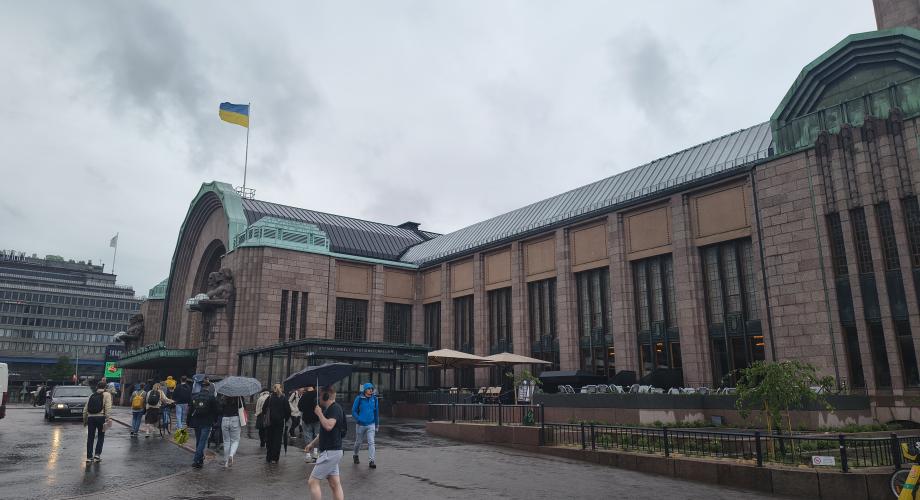
The Flag of Ukraine at Helsinki railway station surprised a teacher from the Bridge2Skills project
The training programme for teachers and principals in the Bridge2Skills project has ended with terrific results. Of the participants, all principals and almost all teachers received the training certificate, which can be considered exceptional in the prevailing circumstances.
The project will continue until the end of 2026 with a familiarisation of 35 selected teachers with inclusive teaching. The concept of vocational special needs teacher does not exist in the Ukrainian system of vocational education, and even just the project’s initial survey of teachers interested in inclusion has already promoted the right of different learners to vocational education and training.
- What changes have you made in your teaching after the Bridge2Skills training?
- Have you shared your learning with others at your school? Or outside your school?
- What surprised you most during the training as a whole?
- What concrete things have you been able to bring to your own classroom after the training?
- Why would you recommend this training to your colleagues?
We asked the teachers we have been following what most surprised them during the training. In addition to the teacher’s supportive and listening role in Finnish schools, also the general positive and supportive attitude of Finnish people towards Ukrainians surprised the participants. For example, the blue and yellow flag at Helsinki railway station, a symbolic indication of Finland’s support for Ukraine, touched the Ukrainians deeply.
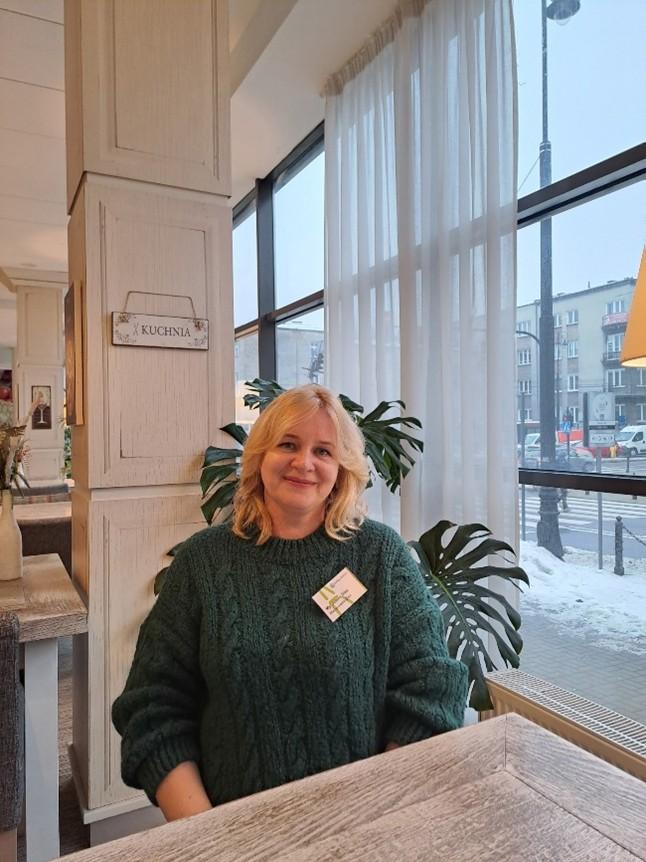
- I have learned to divide the learning outcomes into smaller entities, which I have told the students about. They have received the information positively. Smaller multidisciplinary modules have of course been discussed with the school management and colleagues.
- The school organised a briefing for the entire staff to tell them about what has been learned in the project. I have told my closest colleagues in more detail what we learned in Finland during the study trips, remote training and the local training in Lublin. Next week, I am also going to Paris for the Holocaust Remembrance Day with 20 other Ukrainian history teachers. I am going to share with my Ukrainian colleagues from different schools what I have learned during this period of training.
- The motivation of students studying in Finland. The teacher's role astonished me – it was more like the role of a mentor rather than that of a traditional teacher. The technical tools and learning materials were also modern.
- Modularity, or the planning and implementation of smaller multidisciplinary modules. . I have also used 3D modelling to show weapons and cars from different periods to students. This way, I have managed to get students interested in history and understand the development of technology in history. I have also held distance learning courses on Jewish history and the development of democracy.
- In the school world, we still largely use traditional teaching methods in front of the class. We need to obtain information on new teaching models and learn how to use them.
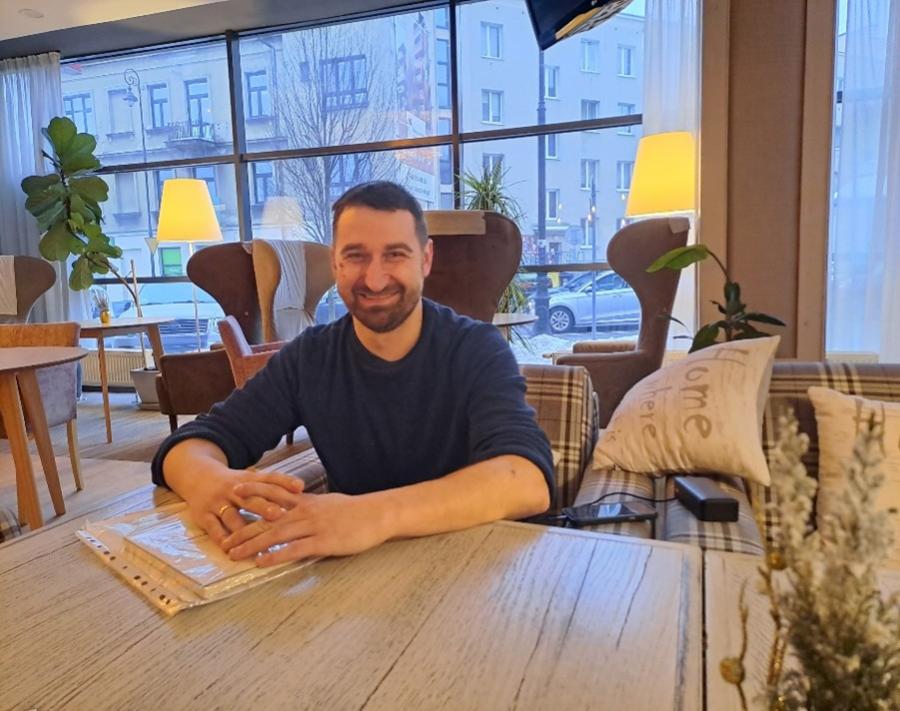
- The students came back in September, conveniently just after the initial period of this training. The new term began with new knowledge and an enthusiastic mind.
- At a personal level, I have shared a lot of learning with colleagues and other friends. We also discussed some of the topics of this training at the school staff meeting and reflected on how we could systematically start using them.
- The flag of Ukraine at Helsinki railway station! The number and quality of devices in Finnish schools. My school has one so-called green learning environment, which uses solar and wind energy. Two years ago, we also had a drone lab, but at the moment, no materials have been budgeted for it and the lab is not in use.
- Digital tools – they make instruction more intensive and enable effective distance learning.
- I would recommend the training for gaining international experience.
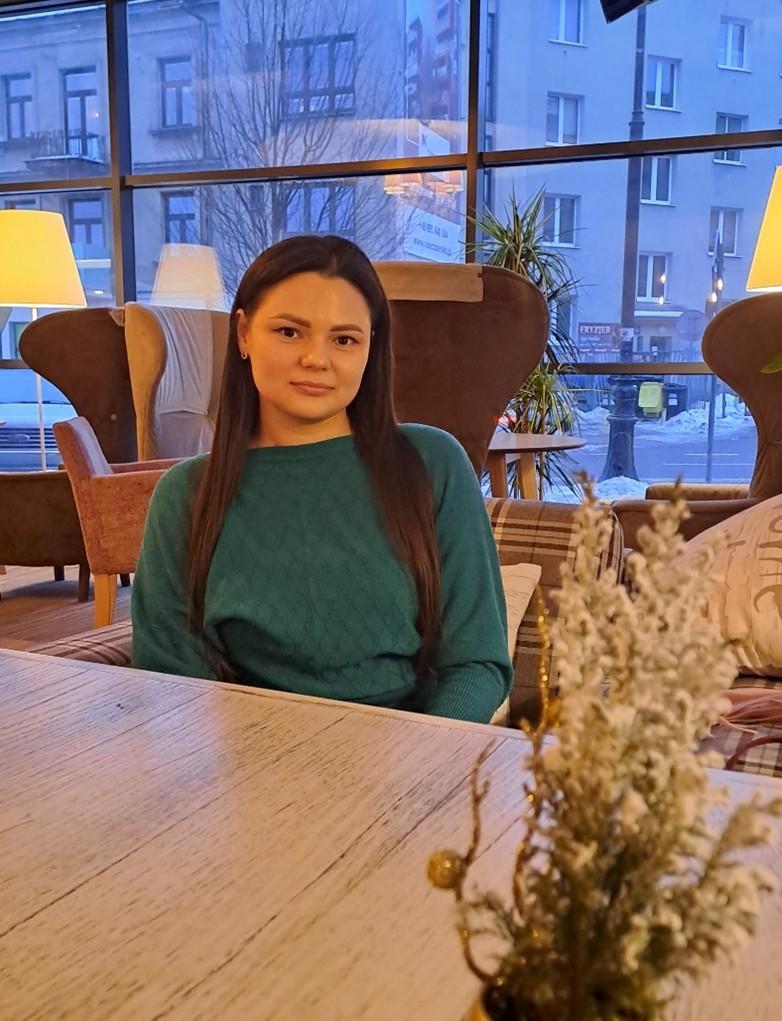
- The training gave me confidence and I can teach and make decisions independently. I am also more open with the students and feel that I am at the same level with them. First, I found I was suspicious of artificial intelligence, but now I’m using it in my work, for example, in communicating information to students and parents. I find it important that we don't lose the opportunity for additional learning.
- My colleagues have asked me about the content of the training, especially about preparing a course plan and describing competence. In addition, on the pedagogical day in my school, we told colleagues about the training together with the school’s directors.
- The openness of the trainers and teachers surprised me most. Communication between the teacher and the student was very open and direct. The technical equipment in Finnish schools also amazed me.
- I have introduced various digital tools. I already knew something beforehand, but the new tools I have learned to use have made my teaching in the classroom more interesting. Some students may be shy to present their work in front of the class. This is where digital tools can be useful by saving the presentation, for example.
- I would also recommend this training to other teachers in our region. The training challenges you to think about matters from a new perspective, outside the familiar model of thinking. This training has been demanding in a positive way. In addition to the actual subject matter of the training, it has provided a lot of experience in performing and communication.
Authors: Halyna Bondaruk and Torun Eklund
Bridge2Skills is a project seeking to develop the VET system in Ukraine. It is coordinated by the Finnish National Agency for Education, and its aim is to broaden understanding of European vocational education and training in Ukraine and to develop the Ukrainian system in line with European education policy and recommendations. The project is funded by the Finnish Ministry for Foreign Affairs. Teachers’ in-service training and study visits to Finland are organised in cooperation with Häme University of Applied Sciences (HAMK) and Jyväskylä University of Applied Sciences (Jamk).