
Bridge2Skills: How International Cooperation is Transforming Vocational Education in Ukraine
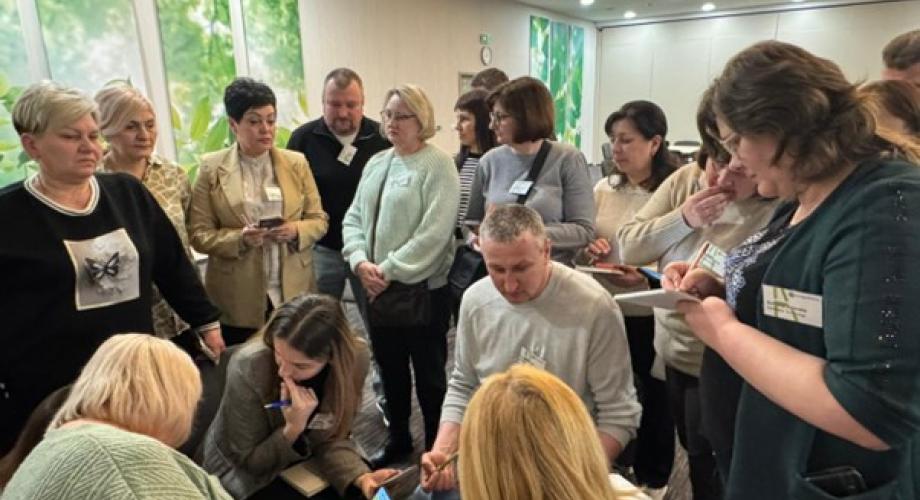
The international Bridge2Skills project has become an important step in the development of vocational education in Ukraine. Participation in the project provided managers and teachers of Ukrainian vocational education institutions with the opportunity to take part in online training, attend in person learning weeks in Poland, and become familiar with the organization of vocational education in Finland. This experience has already begun to influence approaches to teaching, management, and institutional development.
We spoke with representatives of three vocational education institutions – the Novovolynsk Center for Vocational Education, the Lutsk Higher Vocational School of Construction and Architecture, and the Ternopil Vocational College with Enhanced Military and Physical Training – who shared their observations, the changes introduced at their institutions, and their personal reflections after one year of participation in the project.
What changes have taken place during the implementation of the project?
According to Valentyna Prystupa, Director of the Novovolynsk Center for Vocational Education, participation in the Bridge2Skills project became a catalyst for systemic change. All teachers at the institution completed digitalization training courses, which significantly increased their readiness to work with diverse groups of students.
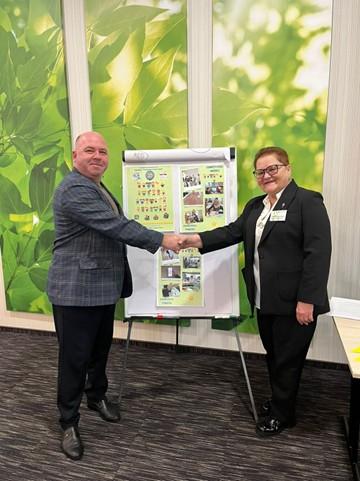
The institution places special emphasis on inclusive education. Currently, seven students with special educational needs are enrolled, including a student with cerebral palsy. Although teacher’s assistant positions have not yet been introduced, this step has already been identified as the next phase in developing inclusive education.
Career guidance has become another important focus. In this context, a hackathon was organized that brought together education, employers, and local authorities. As a result, an effective cooperation triangle – 'education-business-community' – was formed. In addition, two training and practice centers were established, and a culinary hub became a platform for retraining school cafeteria cooks and requalifying adults.
Viktoriia Sobutska, Deputy Director of the Lutsk Higher Vocational School of Construction and Architecture, highlights another important aspect – changes in managerial thinking. She notes that education traditionally remains a rather conservative field, where any transformation requires time.
Participation in Bridge2Skills allowed her to rethink her own approach to digitalization. While modern digital tools play an important role, they should not completely displace traditional teaching methods. On the contrary, combining tried and tested approaches with digital solutions can be more effective and flexible.
She also emphasizes the high quality of mentorship support within the project. Participants received clear, constructive, and respectful feedback that helped them identify weaknesses and understand what needed further improvement. This culture of working with mistakes, based on respect and support, became a valuable professional lesson.
For Vadym Lastovytskyi, Head of the Ternopil Vocational College with Enhanced Military and Physical Training, the key outcome of the project was exposure to the Finnish model of vocational education. Thanks to Bridge2Skills, nine teachers and three members of the management team were able to visit Finnish vocational education institutions and see firsthand how the system operates.
The learner-centered approach made the strongest impression: students can study at a time convenient for them, combine education with work, return to learning throughout their lives, and continuously improve their qualifications. This model is closely linked to cooperation between educational institutions and businesses, creating real opportunities for employment.
Influenced by this experience, the college introduced a specialization in alternative energy and launched short term courses for adults – both for company employees and for individuals referred by employment centers. Systematic cooperation with businesses and their involvement in supporting the educational institution were initiated within the framework of the project.
What surprised participants most during the implementation of the project?
All interlocutors unanimously note that the trip to Finland was one of the strongest elements of the project.
According to Valentyna Prystupa, this experience influenced not only professional approaches but also worldviews. The balanced pace of life, sense of calm, accessibility of the environment, spacious educational facilities, and systematic support for people with disabilities demonstrated how friendly and humane an educational environment can be. At the same time, it became clear that there is still much to be done within the Ukrainian system.
Among the project elements that impressed her most, she mentions the diversity of learning formats – from online courses to in person programs; the opportunity to directly explore the Finnish model of vocational education; teachers who inspired and motivated change; broad access to lifelong learning without age restrictions; and a high level of technical support for online learning and the implementation of innovative technologies.
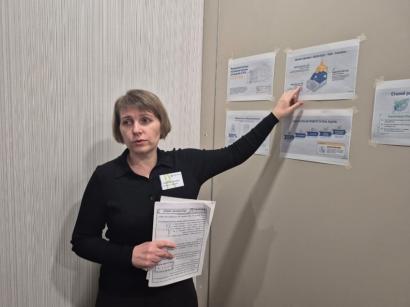
For Viktoriia Sobutska, the Finns themselves were the biggest discovery – their communication style and way of working. Their composure, emotional restraint, and remarkable patience differed significantly from her experience of cooperating with representatives of other European countries. She had no preconceived notions or stereotypes about Finland, so the calm pace, absence of noise, and focus on process came as a surprise. Compared to cooperation with Eastern European partners, where tempo and emotional intensity tend to be higher, the Finnish approach felt less “driven” but at the same time more stable and effective.
She also emphasizes the quality of mentorship support within Bridge2Skills. The project had a long term structure, which significantly distinguished it from experiences with short term initiatives. Particularly valuable was the approach to working with mistakes: instead of criticism, participants received constructive and supportive feedback that helped them move forward.
For Vadym Lastovytskyi, the most vivid impression was the trip to Finland and acquaintance with the model of consolidated educational institutions. Here, several vocational schools are combined into powerful multi profile colleges that train specialists in many fields simultaneously – from agriculture to medicine.
The level of material and technical resources was particularly impressive, especially in medical education and robotics. This experience inspired the idea of showcasing similar institutions to Ukrainian colleagues in the future as an example of strategic development in vocational education.
Why is participation in such projects worth recommending?
All participants readily recommend taking part in international educational projects.
“I would one hundred percent recommend participation in such projects,” says Valentyna Prystupa. In her opinion, international initiatives provide an opportunity to become familiar with the experience of other countries, master innovative technologies, gain inspiration through live professional communication, and discover new approaches that can be adapted within one’s own institution.
Viktoriia Sobutska sees participation in such projects as an opportunity to expand personal boundaries, step outside the familiar professional environment, and immerse herself more deeply in another culture. For her, Bridge2Skills also became a test of personal resilience and confirmation that challenges strengthen individuals and open up new opportunities.
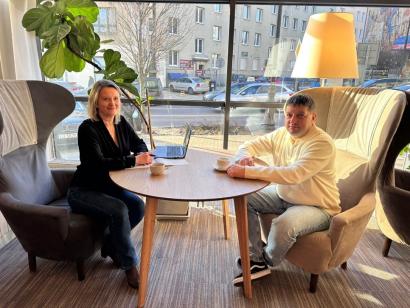
Vadym Lastovytskyi is convinced that without development, learning, and openness to new ideas, educational institutions risk stagnation. Finnish education, which he considers one of the best in the world, offers valuable opportunities to adopt best practices and learn from people and systems that have already achieved significant results.
He also highlights the value of the professional community formed through the project. Participation of vocational institutions from different regions of Ukraine enabled not only the exchange of practices but also the establishment of personal connections that already support real work today.
The Bridge2Skills project has demonstrated that international cooperation can serve as a powerful instrument for qualitative change in vocational education. The combination of innovation and tradition, access to international experience, participant support, and the formation of professional communities create a solid foundation for the sustainable development of vocational education institutions and for improving the quality of education in Ukraine.